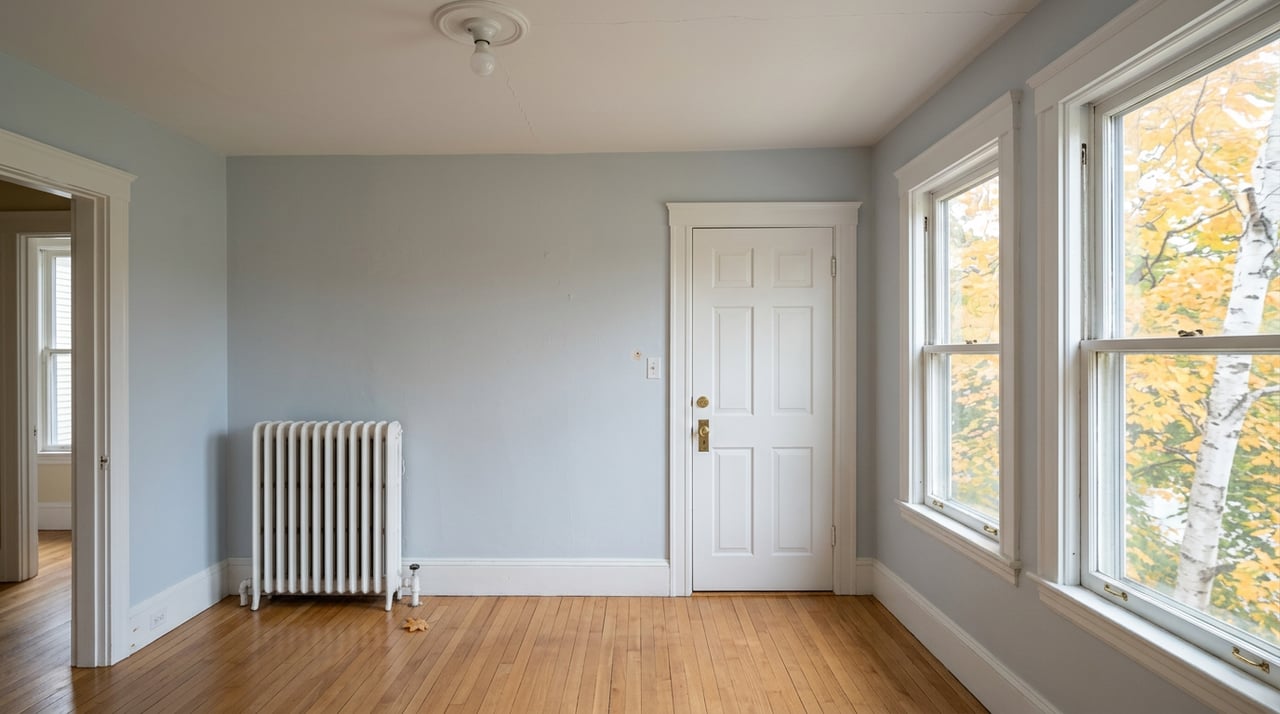
Ithaca Multi-Family Investment Property Returns Explained
Two side-by-side duplexes in Ithaca can carry the same asking price, the same bedroom count, and the same proximity to Cornell, and produce very different legal rent rolls. One might house seven unrelated tenants. The other might cap at four. Nothing on the listing sheet tells you which is which.
That gap between the pro forma and the legal reality is the mechanism most out-of-area investors miss. In this market, the sticker price is commodity information. What decides your return is a stack of local rules that shape who can live in the building, how often it gets inspected, and whether you can ever pivot to short-term rentals if the math stops working.
As of July 2026, the median list price in Ithaca was about $399,000 at roughly $234 per square foot, essentially flat year over year on price and down about 3% per square foot. Fall Creek multi-family listings ran slightly above that, with a July 2026 median around $407,000, and multi-family properties city-wide have been sitting an average of about 60 days before selling.
Those numbers set the entry ticket. They do not tell you what the building can legally earn. A three-bedroom unit in one zone can house one family plus a single unrelated tenant. The same three-bedroom unit in another zone can house three unrelated tenants. Same bedroom count, very different rent.
If you are underwriting a duplex on bedroom count alone, you are underwriting a fantasy.
The City of Ithaca's zoning code sets the number of unrelated occupants allowed in a dwelling unit, and it varies sharply by district. The relevant rules live in Chapter 325 of the City Code.
| Zone | Two-family dwelling, per unit | Single-family dwelling |
|---|---|---|
| R-1, CR-1 | 1 unrelated individual (with narrow owner-occupancy exceptions) | Family plus 1 unrelated, or 2 unrelated if owner-occupied |
| R-2, CR-2 | 2 unrelated individuals per unit | Up to 3 unrelated (per Ithaca College's off-campus guidance) |
| R-3 | Same as R-2 baseline for two-family | Family plus 2 unrelated |
The Cornell Heights side-by-side duplexes on Heights Court that have moved in the last cycle are marketed as legal for seven unrelated occupants across both units, with separately metered gas, electric, and water. That legal seven is what makes the number work. A comparable-looking duplex in a stricter zone will cap at four, and no amount of finished basement space changes that.
Ithaca has also sharpened the penalties. Under reforms Common Council passed in 2019, each occupant over the legal limit counts as a separate offense, with fines of $250 to $500 per person. A landlord packing an extra two students into a four-legal duplex is not risking a single ticket. They are risking a stack.
For an investor, the practical translation is this: before you write an offer, confirm the parcel's zoning district and the legal occupant count for the exact unit configuration you are buying. That number, multiplied by prevailing per-bedroom rent, is your ceiling. Not the bedroom count on the listing.
Every residential rental inside city limits needs a valid Certificate of Compliance from the Building Division. The inspection intervals are set by building type, and they matter for two reasons: they force capex timing, and they surface violations that can hold up a sale.
Inspectors look at structure, exterior, egress, HVAC, electrical, plumbing, fire separations, and penetrations. If violations turn up on the first pass, you get 30 days to correct them before reinspection. The Building Division has publicly noted that inspectors are often scheduling several weeks out, which matters when a Certificate has already lapsed and a buyer wants a firm closing date.
Two transaction-level implications:
Ask the listing agent for the current Certificate and its expiration date on day one. If the current C of C expires two months after your projected closing, you are the one paying to bring the building through the next inspection, and any deferred maintenance the inspector flags becomes your problem.
Cornell's off-campus office publishes C of C status by street address in its rental database. It was built for students and parents, but it is equally useful for an investor doing pre-offer diligence in Collegetown, Cornell Heights, or Fall Creek. If the address you are considering is listed with an expired Certificate or documented violations, you have a negotiating lever the seller may not expect you to know about.
Investors used to underwrite an Ithaca duplex with an unspoken backup plan: if the student rental math tightened, flip one side to short-term rentals during football weekends, graduation, and Cornell parents' weekend. That plan no longer works for pure investors.
Common Council adopted a Short-Term Rental Ordinance on May 1, 2024, with full enforcement beginning June 1, 2025. A short-term rental is any stay under 30 days. Permits are only issued for the host's primary residence, in a single-family home, two-unit home, or an owner-occupied unit within a larger building. The permit costs $400. Violations run up to $500 per day or the daily rental rate, whichever is higher, and a landlord found in violation becomes ineligible to hold a permit for three years.
The mechanism that closed here is subtle but important. If you own a duplex, live in one side, and rent the other, you can potentially run one unit as a short-term rental. If you own the duplex from a distance and rent both sides, you cannot. The ordinance was designed to push non-owner-occupied inventory back into the long-term market, and it does. Model your returns on 12-month leases at the legal occupancy cap, or don't model them.
Fall Creek's appeal to owner-operators is the walkability to Gimme! Coffee, Thompson Park, Ithaca Falls Natural Area, the Cascadilla Gorge Trail, DeWitt Mall, GreenStar Food Co-op, and the Ithaca Farmers Market. That mix of tenants, some graduate students, some hospital staff at Cayuga Medical, some downtown professionals, tends to produce steadier rent rolls than pure undergraduate blocks, and lower turnover costs. Fall Creek multi-family listings have been moving in the high $300s to low $600s, with the July 2026 neighborhood median around $407,000.
Cornell Heights and the immediate blocks around North Campus produce the highest per-bedroom rents in the city, and the largest legally occupied duplexes here have quietly been the source of the sharpest cash-on-cash returns. Watch for legal occupancy documentation carefully. The Heights Court examples work because the building was configured and permitted for the higher count, with separate utility meters and 1.5 baths per side. A generic four-bedroom colonial three blocks away will not carry the same legal load.
South Hill trades on proximity to Ithaca College and the TCAT bus lines. The properties are generally smaller, entry prices lower, and demand is consistent. A South Hill duplex advertised at 100% occupancy through the following July is genuinely 100% occupied. The underwriting caution in this pocket is condition, not demand. Many buildings are older frame construction with layered updates, and inspection findings can be meaningful.
Does the unrelated-occupant cap apply to graduate students, or only undergraduates? The rule is written around occupants, not enrollment status. A household of five graduate students is treated the same as a household of five undergraduates. The relevant test is the family or functional-family-unit definition in the zoning code, not what school anyone attends.
If I buy a duplex in the Town of Ithaca rather than the City, do the same rules apply? No. The Town of Ithaca has its own rental permit regime under Chapter 207 of the Town Code, with separate operating-permit requirements and occupancy standards tied to the Town's zoning chapter. City rules stop at the city line. Confirm which municipality the parcel sits in before assuming any rule carries over.
Can I convert a legal two-family into a three-unit to lift income? Only where the zoning district permits three-family dwellings and the building can be brought into full code compliance for a three-unit certificate. That path exists in parts of the city, but it is a design and permitting project, not a lease-up exercise. Underwrite the acquisition on what the building legally is today, and treat conversion upside as optional.
If you are weighing a specific duplex or small multi-family in Ithaca and want a second read on the zoning, the Certificate of Compliance history, and what the legal rent roll actually supports, Brian DeYoung has spent nearly four decades working these blocks as a broker, an owner, and a builder. Let's Connect.
Stay up to date on the latest real estate trends.
Dedicated support from your first search to closing day. Let Brian DeYoung guide you toward your next dream home.