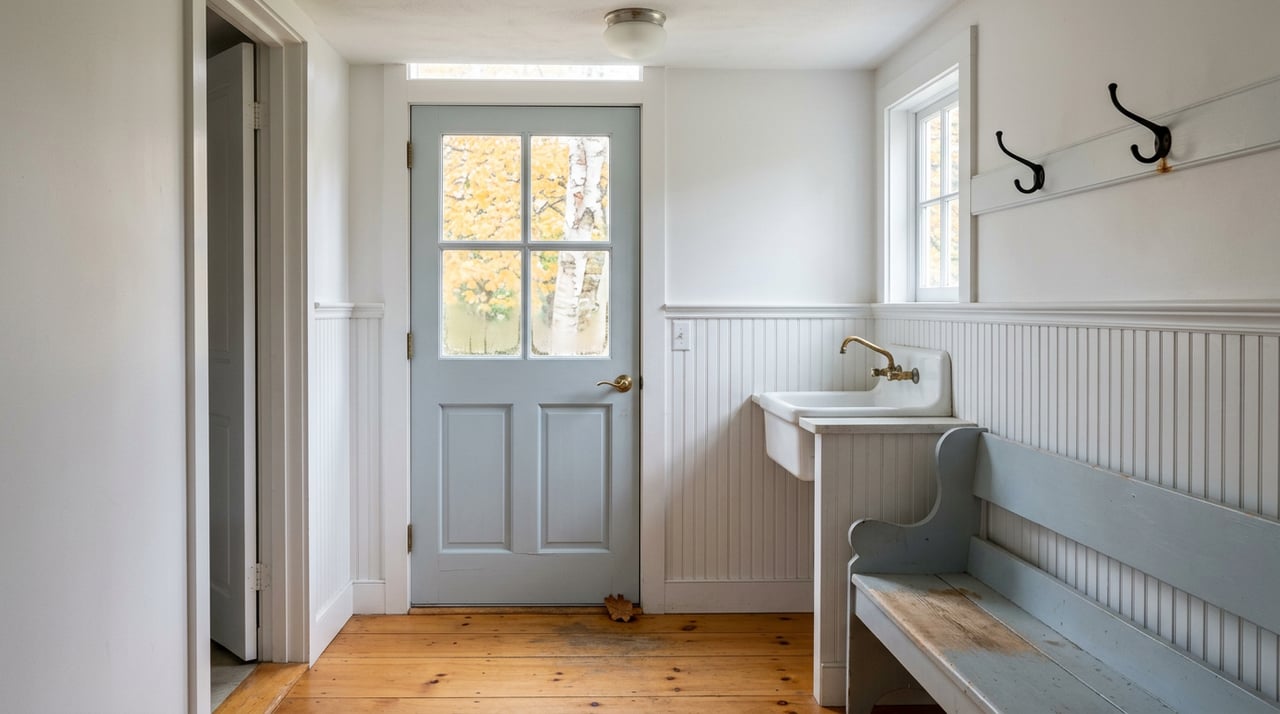
What Newfield Sellers Should Know About Septic Disclosure
For years, a Newfield homeowner selling a house on a well and septic system had a legal escape hatch. If you didn't want to answer questions about your septic tank's age or when it was last pumped, you could hand the buyer a $500 credit at closing instead of filling out New York's Property Condition Disclosure Statement. No form, no questions, no exposure.
That escape hatch closed on March 20, 2024. The $500 credit option is gone from New York law, and every seller of a one-to-four-family home now has to complete the disclosure form itself, in detail, under a certification that can expose them to buyer claims for years after the sale closes. If you're getting ready to list a home in Newfield, where most properties outside the hamlet run on private well and septic rather than municipal service, this change lands differently than it does in a neighborhood full of city sewer connections. It's worth understanding exactly what changed and why the septic section of that form deserves more attention than most sellers give it.
Before 2024, New York's Property Condition Disclosure Act gave sellers a choice: complete the 48-question disclosure form or skip it and credit the buyer $500 at closing. Most sellers who didn't want to think too hard about their home's mechanical history took the credit. It was simple, and it made the septic question disappear.
That option no longer exists. Every seller now has to answer the form's questions directly, and a knowingly false or incomplete answer can expose them to a buyer's claim before or after the transfer of title, with a statute of limitations that can run as long as six years.
Then, effective July 1, 2025, New York amended the form again. Question 36, the one about sewage systems, now includes a line pointing sellers and buyers to a New York State Department of Health informational pamphlet on septic system operation and maintenance, published under the state's general business law. In practical terms, the state has attached an official reference point to the exact question that used to be easiest to wave off. A buyer's attorney reading a vague or blank answer next to that pamphlet reference has an easy opening to ask why.
If you've never seen the mechanical section of New York's disclosure form, the specificity might surprise you. Sections 34 through 36 ask sellers to answer these questions directly rather than in general terms:
| What the Form Asks | What You Need to Know | Why It Matters in Newfield |
|---|---|---|
| Water source: well, private, municipal, or other | Which one applies to your property | Most of Newfield outside the hamlet relies on private wells, not municipal water |
| Has water quality or flow rate been tested? | Yes, no, or unknown, with details if yes | A property that's never been tested puts more weight on the buyer's own testing during due diligence |
| Type of sewage system: public sewer, private sewer, septic, or cesspool | Which one applies | The Newfield hamlet has municipal water and sewer; most of the surrounding town does not |
| If septic or cesspool: age, date last pumped, and frequency of pumping | Specific dates and numbers, not estimates | Vague or missing answers here are the most common reason buyers ask for a fresh inspection before closing |
None of this is a pass-fail test. The form doesn't require a perfect system, only an honest one. But "unknown" answers across all four septic questions read very differently to a buyer's attorney than answers backed by a receipt from last year's pump-out.
Newfield's Main Street sits in a hamlet served by municipal water and sewer, but drive a few minutes in any direction and you're back on well and septic. That split is exactly why this disclosure change hits Newfield sellers harder than sellers in a neighborhood with citywide sewer infrastructure. Across all of Tompkins County, roughly 15,000 homes located outside municipal sewer service areas depend on onsite wastewater treatment systems, according to the county's Whole Health department. Newfield's own mix of a serviced hamlet surrounded by well-and-septic countryside is a small-scale version of that same countywide pattern.
That's also why the county has spent real effort trying to fund septic and well repairs for residents who can't absorb the cost of a failed system. Tompkins County Whole Health partnered with Ithaca Neighborhood Housing Services in 2024 to survey residents about septic and well problems ahead of a grant application, specifically to build a case for funding that could cover repair or replacement costs for income-eligible households. The county's Frank Kruppa, Commissioner of Whole Health, has described a failing system as a real financial burden for households in the area, and INHS's Delia Yarrow has pointed homeowners toward pre-applications for the assistance separately from the survey itself. None of this means every Newfield septic system is in trouble. It means the county has already recognized how common and how expensive this problem can be, which is exactly the kind of local context a seller should know before assuming a septic question is a minor formality.
The county's own past efforts show why this matters financially. Tompkins County previously ran a Septic Upgrade Program, funded through a state community development block grant, built around the reality that full septic replacements typically run well into five figures, a cost that can catch a seller off guard if it surfaces during a buyer's inspection instead of before listing. Programs like that come and go with funding cycles, so check with Tompkins County Whole Health for whatever assistance is currently open rather than assuming a specific program is still accepting applications. Either way, the underlying math hasn't changed: a septic problem found by a buyer's inspector after an accepted offer is a negotiation you're having from a weaker position than one you handle on your own timeline.
Local septic companies already treat pre-sale evaluations as a distinct service for exactly this reason. Clean Earth Septic, which serves Ithaca, Trumansburg, and the surrounding towns, offers what it calls real estate septic tank assessments alongside standard pumping and inspection work. Finger Lakes Habitat Home & Site Services LLC handles septic installation and replacement across Newfield, Trumansburg, and Ithaca when a system needs more than a pump-out. Getting either kind of service done before you list, rather than after an offer comes in, means you control the timeline and the repair choices instead of reacting to a buyer's inspector on their schedule.
Can I still give the buyer a credit instead of filling out the disclosure form? No. The $500 credit option was eliminated from New York's Property Condition Disclosure Act as of March 20, 2024. Every seller of a one-to-four-family residential property now has to complete the form itself.
What if I honestly don't know when the septic tank was last pumped? Mark it unknown rather than guessing. New York's form gives you that option, and guessing wrong is worse than admitting you don't know, since a knowingly false statement is what creates real exposure after closing.
Does this disclosure requirement apply if I'm only selling land, without a house? The Property Condition Disclosure Act applies to sales of residential real property, generally meaning a one-to-four-family dwelling. Vacant land sales fall outside that requirement, though buyers of land planning to build will still need their own septic design and permit process through the county health department.
Is a septic inspection legally required before I sell in Newfield? New York state law doesn't mandate a pre-sale septic inspection the way some states do. What it mandates is honest disclosure, and most buyers, especially those using a mortgage, will require their own inspection during due diligence regardless of what the state requires.
If you're weighing a sale in Newfield and want to understand how your specific well and septic setup affects your prep timeline, pricing, and negotiating position, Brian DeYoung has spent his career on both sides of construction and real estate in this market. Let's Connect before you list, not after a buyer's inspector finds something you wish you'd found first.
Stay up to date on the latest real estate trends.





Dedicated support from your first search to closing day. Let Brian DeYoung guide you toward your next dream home.